
Democracy in action? NEXT WEEK the government’s treaty bill handing the Chagos Islands’ sovereignty to Mauritius returns to the House of Lords
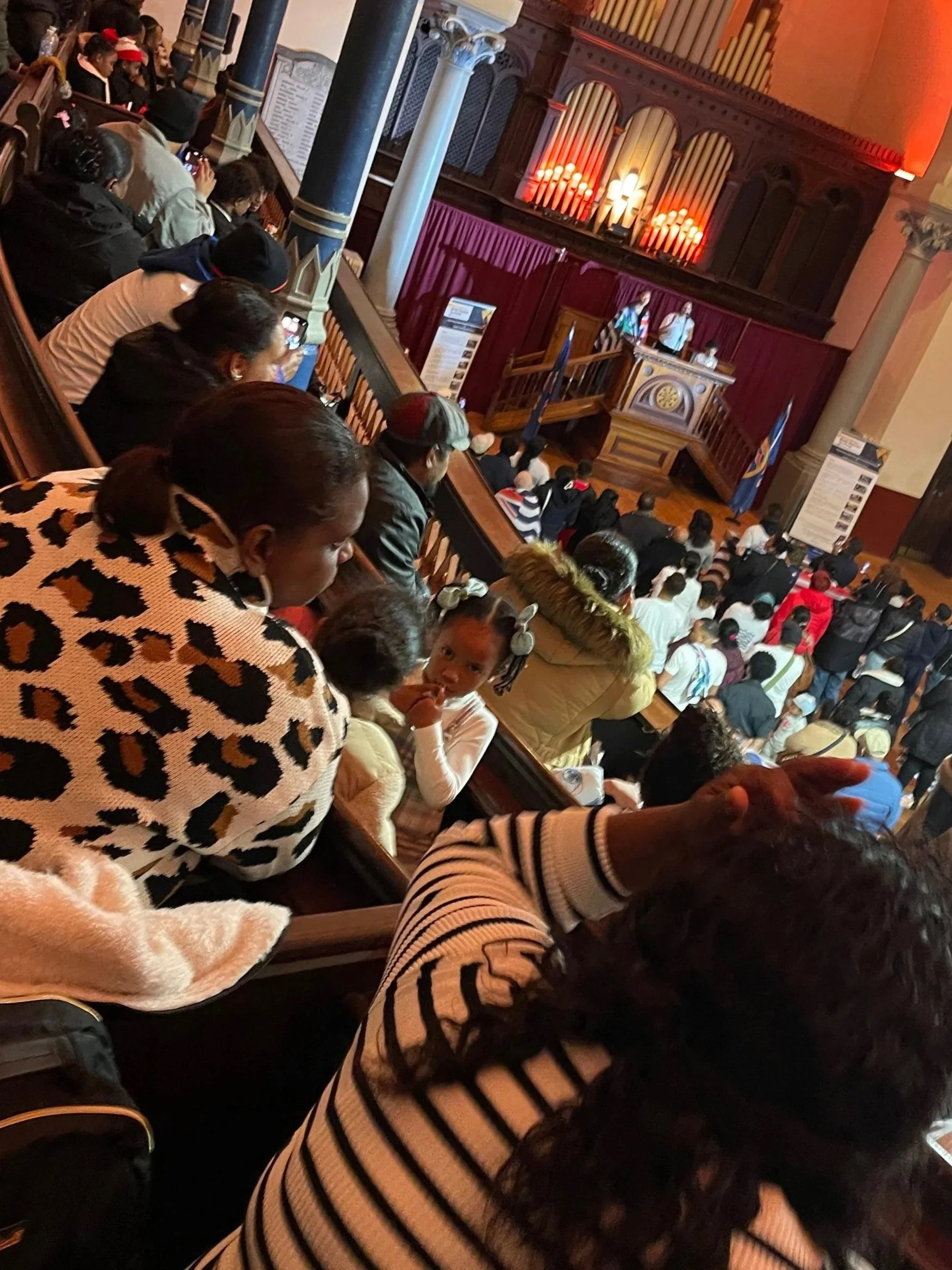
It’s crunch-time for all Chagossian people. What rights to visit, settle on and/or control the Chagos Islands will they get in 2026? Any?
The first week of the New Year: an immediate debate in the House of Lords on the issue. Lords will debate whether the Government’s Diego Garcia Military Base and the British Indian Ocean Territory Bill 2024 2025 - handing sovereignty of the British territory the Chagos Islands to Mauritius - should be approved.
Last November the vote was delayed after the House of Lords voted for an amendment requiring the government to consult the Chagossian community around the world before ratifying the treaty with Mauritius.
The consultation report Chagossian views on the UK-Mauritius Chagos Agreement now published confirms that, “by its own admission the UK Government did not consult the Chagossian community.” This is embarassing for the government. David Lammy, then Foreign Secretary, when announcing the treaty in parliament on 7 October 2024 agreed in principle by the UK and Mauritius governments appeared to contradict this. He confidently told the House of Commons, “of course we kept the Chagossians informed all along the way.” They weren’t. At least not the Chagossian groups in the UK and Mauritius THE CHAGOS FILES has been talking to.
The UK Parliament’s International Relations and Defence Committee was tasked with surveying Chagossian people. Yet the survey’s methodology has been contentious for all sides for and against the deal.
One problem that the authors themselves mention is that they couldn’t validate the identity of all respondents. They didn’t have access to passport data for example, and had to go on trust that those replying to the online survey were genuinely who they said they were. This is frustrating for everyone.
Critics of the survey such as Richard Dunne, a barrister, former Royal Navy Officer and Legal Adviser to the Commander in Chief Fleet and currently consultant to the Chagos Refugee Group (CRG), a leading Chagossian group in support of the treaty, argues the survey has numerous limitations.
Author of the report Independent Analysis of the House of Lords International Relations and Defence Committee Survey and Report, published on 29 December 2025 and sent to selected parliamentary and government officials in the UK and Mauritius and exclusively to THE CHAGOS FILES, Dunne writes: “The widespread use (or misuse) of a minute number of respondents’ views is used to support wholly negative headings and contentions. There is no proof that this represents any meaningful numbers of respondents.”
Here at THE CHAGOS FILES where we are tracking democracy (or the lack of it) in these negotiations. We are concerned that the survey fails to include a key democratic question about the sovereignty deal. Having interviewed over 30 Chagossians for a forthcoming THE CHAGOS FILES report, interviewees have told us that some kind of democratic meaningful participation or control over the sovereignty process and/or the islands is what they want to have.
The survey should have asked whether the respondents think Chagossians, not the Mauritian or British state, should have control over the islands, or at least a greater say in what goes on there and what such a democratic relationship to Britain or Mauritius (or both) could look like. An opportunity for respondents to mention this is was in the “Anything else?” section at the end, showing the low priority given by the House of Lords to the question of democratic rights for Chagossians.
Despite the lack of specific questions on democratic rights, the survey’s authors mention that “open-text submissions revealed a wider set of concerns that extended well beyond” the core survey question areas of resettlement and employment, financial arrangements, and environmental provisions. The survey’s authors quote individual submissions ie qualitative evidence about certain respondents’ views on democracy and agency. Clearly many respondents had much to say on this issue despite it not appearing as a set of key topic questions that could be quantified.
The survey report confirms that Chagossians demand “meaningful participation in decisions affecting the islands”, that “resettlement is a central concern”, and “tangible restitution” (money or the return of the islands) are also important. Yet no percentage numbers could be presented on these issues; it is left to the reader to speculate whether these opinions are a minority viewpoint or shared by most Chagossians.
The lack of questions on democratic rights was a missed opportunity. They could have been a useful indicator on what a vote (if ever Chagossians were granted one) on the issue of sovereignty and democratic control. The survey’s authors simply hadn’t asked the questions about direct democracy at all never mind in a quantitatively meaningful way.
Of concern too is that it’s reported that only “around half of the respondents based in Mauritius indicated some degree of confidence in their government’s ability to facilitate resettlement, for instance” and “very few respondents in the UK shared this view.” Under the treaty Mauritius is allowed to resettle Chagossian people but is not obliged to do so.
The committee published the results of its survey of over 3000 respondents (about half from the UK, and half from Mauritius) Chagossian Views on the UK-Mauritius Chagos Agreement just before Christmas on 17 December. This was in time for the House of Lords’ continuing debate on the treaty bill in the second week of the New Year yet out of time for any meaningful press coverage and public debate. Surely British people should be encouraged to discuss and voice their opinion on handing sovereignty of part of the country to another state?
As the Lords gather next week to debate the Chagos sovereignty treaty bill on 5 January (report stage) and 7 January (3rd Reading), the 50 or so outstanding amendments left tabled mainly by the Conservatives may further delay its final reading and return to the House of Commons. Or the amendments will be brushed aside, the bill returned to the Houses of Commons and a final vote taken by MPs to ratify the treaty.
Whatever the result, for all sides, can we really say that the whole process is a democratic one?
Tessa Clarke/1 January 2026/ UPDATED: 2 January 2026